Bridging Classrooms, Building Connections: Three Singapore Volunteers in Malaysia
The pilot Malaysia-Singapore English Volunteers Programme brought Singaporean volunteers and Malaysian educators together to co-create meaningful English learning experiences through collaboration and exchange.

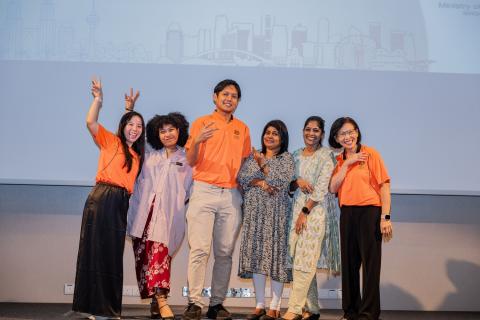
From 14 August to 11 September 2025, the Singapore International Foundation (SIF), in collaboration with Yayasan Guru Tun Hussein Onn, conducted the pilot of the Malaysia-Singapore English Volunteers Programme (MSEVP). Hosted in SK Taman Sri Muda and SK Subang – primary schools under Malaysia’s Ministry of Education (MMOE) in Selangor – the pilot saw Singapore International Volunteers (SIVs) working closely with Malaysian Counterpart Teachers (CTs) to co-facilitate English-related activities and jointly support learning in schools.
Ms Tan Pei Yu, Mr Khalid Bin Othman, and Ms Halimah Bte Marjubee – experienced how volunteerism and cultural exchange can take shape through everyday interactions, shared goals, and genuine collaboration.
Rediscovering the Purpose of Volunteering
For Pei Yu, volunteering had always been part of her life. In the hustle and bustle of everyday life, there was little time set aside to volunteer. The invitation to be a part of this meaningful experience was timely.
“The stars just happened to align and that was why I applied,” she said. It felt like a meaningful bridge back into the school environment.
Khalid joined with a clear motivation: to experience a different education system. Teachers often manage tight timetables and fixed academic schedules, leaving few opportunities for venturing overseas for wider exposure. The pilot programme presented a rare chance to do just that: to observe, teach and exchange practices in a school abroad.
For Halimah – recently retired but still active in relief teaching – the flexibility of her schedule allowed her to pursue something she had always wanted to experience: contributing to a school community beyond Singapore.
Different journeys led them there, but a similar mission brought them together – to learn, contribute, and empower a neighbouring school community.
Collaboration That Felt Natural
A hallmark of the pilot was its emphasis on co-facilitation and collaboration. SIVs and CTs worked as partners, designing and delivering activities in English within and outside the classroom.
This collaborative model became a natural platform for mutual learning.
Halimah noted that many classroom challenges were in fact, similar. She said: “Teachers are teachers everywhere. We speak the same language; we share the same problems.”
For Pei Yu, her initial sense of uncertainty quickly faded once conversations turned to teaching. Reflecting on how lesson discussions deepened almost immediately, she said: “Collaboration was made easy.”
Khalid’s experience reinforced the value of diverse approaches. His counterpart in Malaysia used fewer tech-based teaching tools and resources than he often saw, prompting him to revisit fundamental principles of lesson design and delivery. “Simple pictures, words, and storytelling can drive a lesson,” he observed. Those were the ways of earlier teachers and applying these was timeless.
He had an opportunity to share approaches and strategies from his own classrooms – illustrating the two-way professional exchange the pilot aimed to foster. Rather than comparing systems, the volunteers described an environment where both sides contributed practical insights and worked towards shared goals for their students.
Students as Connectors
The students also played a significant role in shaping the volunteers’ experience during the pilot programme.
Pei Yu recalled how the students eagerly initiated conversations. Though she spoke little Malay, their exchanges still flowed, and she was able to learn from the students – thanks to shared enthusiasm and inventive ways of communicating.
Khalid developed a routine with a Primary Four student who would often look for him to practise English. Their simple, almost-daily exchanges quickly became one of the highlights of his time there, a small ritual he looked forward to each day.
In Halimah’s classes, morning dialogues showed steady signs of growth. Students became more comfortable using English, memorising their lines and offering greetings before lessons even started. She learnt that simple gifts of stickers became a genuine source of motivation.
These moments showed how cross-cultural exchange often grows through small, genuine interactions that build trust over time.
Warmth in the School Community
When asked, all three volunteers spoke about the warmth extended by the Malaysian teachers and staff. Invitations to meals, casual conversations, and thoughtful gestures made them feel welcomed from the very beginning.
What struck to them was not how different things were, but how familiar the exchanges were. Common routines, similar school cultures and a shared commitment to promoting students’ well-being created an immediate sense of familiarity and connection. It was this commitment that allowed their experience to unfold with comfort, respect, and mutual understanding.
As Pei Yu noted: “We are similar in so many ways.”
Lessons They Brought Home
Each volunteer returned with insights they hoped to apply in Singapore classrooms.
For Pei Yu, seeing students respond enthusiastically to enjoyable, meaningful lessons reminded her to prioritise engagement and learning experiences over administrative checklists.
Khalid gained renewed confidence that technology is not always necessary for effective teaching. His time in Malaysia strengthened his belief in adaptability – timely for his transition to teaching in primary school when he returned to Singapore.
For Halimah, the experience reaffirmed that strong teaching is rooted not in facilities, but in clarity, consistency, and genuine care for students.
Together, their reflections highlighted how the pilot nurtured both professional growth and renewed perspectives on teaching.
A Shared Experience, Not a One-Way Contribution
The volunteers were unanimous when sharing that their month in Malaysia did not feel like traditional volunteering, where one side “gives” and the other “receives”. Instead, the pilot cultivated a balanced exchange.
Khalid said: “It didn’t feel like volunteering; it felt like an exchange because I also learned a lot from them.”
This sentiment captures the heart of the pilot programme: fostering collaboration built on respect, openness, and the recognition that both sides have much to offer.
Looking Forward
The pilot MSEVP created space for connection, growth, and shared purpose. For our SIVs, the experience strengthened their understanding of how neighbouring communities can continue to support one another through education.
They returned with renewed energy for teaching, practical insights to enrich their classrooms, and a stronger appreciation of the ties across the border.