Climate Adaptation and Resilience: The Opportunity Awaiting Southeast Asia

20 Feb 2026
Late last year, as world leaders gathered in Belem, Brazil, for the 2025 United Nations Climate Change Conference (COP30), two major storms hit the Philippines, Vietnam and Thailand.
Typhoon Kalmaegi (Tino) and Super Typhoon Fung-Wong (Uwan) struck within days of each other, disrupting millions of lives across the region, causing an estimated $250 million and $350 million in damages, respectively. Critical infrastructure crumbled under relentless rain, leaving entire communities in darkness and without clean water for days.
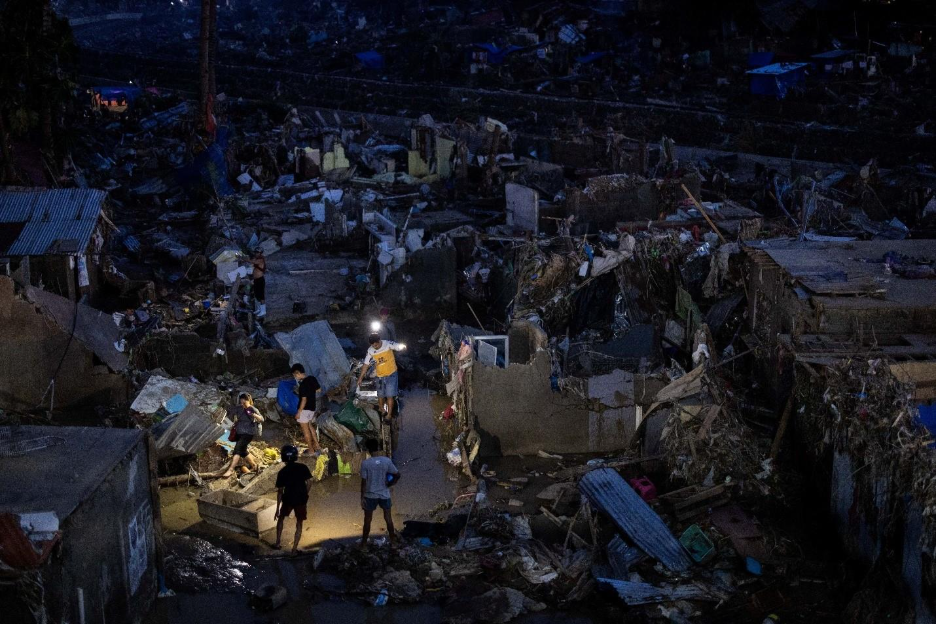
These storms were just the latest to stress the region. While the economic impact of climate-related disasters globally has more than doubled over the past two decades, in Southeast Asia, floods alone cost over $2 billion in direct losses each year.
This figure likely captures only a portion of the true cost, as productivity losses, supply-chain disruptions and health impacts compound economic and social impacts.
However, while the public sector accounts for the vast majority of climate adaptation funding, there is a sizeable opportunity for private sector investments in adaptation through water that can strengthen climate resilience.
The region’s vulnerability to climate shocks is acute: Vietnam is among the most at-risk countries globally for coastal and riverine flooding, while other high-risk countries include the Philippines, Indonesia, Thailand and Cambodia. Rapid urbanisation, fragmented governance and uneven planning standards leave many communities facing repeat floods with limited resources.
This year offers a rare opportunity for regional leaders to tackle this growing challenge, with 2026 being referred to as the “Year of Water” in preparation for the UN Water Conference in December.
The year opened with the World Economic Forum’s Annual Meeting 2026 in Davos, Switzerland, putting water firmly on the agenda through sessions such as Water in the Balance and Making Water, Differently, highlighting the role of water not as a downstream environmental issue but as a foundational driver of growth, stability and security.
These discussions are carried out throughout the year through multistakeholder communities and initiatives, including Water Futures and the Aquapreneur Innovation Initiative.
Momentum continues in Singapore through Singapore International Water Week and Ecosperity, where leaders will advance solutions on water innovation, sustainable finance, decarbonisation and climate resilience.
Global attention will then extend through the three Rio Convention meetings on climate (UN Framework Convention on Climate Change), biodiversity (Convention on Biological Diversity) and desertification (UN Convention to Combat Desertification), before culminating in the UN Water Conference in December in the United Arab Emirates.
For the private sector in Southeast Asia, these events are an opportunity to connect with other stakeholders to better understand and tackle the shifting risk landscape.
How is climate resilience and adaptation a business opportunity?
As extreme events are reshaping markets, supply chains, and labour productivity across Southeast Asia, water offers a clear and actionable lens for climate resilience and can serve as a reliable proxy for broader adaptation gains across key sectors and value chains.
Despite growing risks, over 90% of current global adaptation finance still comes from public sources, both governments and development banks, revealing limited private-sector participation.
Closing this gap requires aligning public priorities with private-sector incentives. As highlighted in the recent World Economic Forum and Boston Consulting Group report The Resilience Opportunity: Unlocking Climate Resilience through Public-Private Collaboration, climate adaptation and resilience represent a trillion-dollar annual investment opportunity by 2050.
Within this lies an opportunity to scale infrastructure through public-private collaboration valued at $320-500 billion per year.
Many companies and public agencies lack clear ownership of climate risk or do not see the near-term return needed to justify investments. As a result, climate risks are often underestimated and adaptation is viewed as a cost rather than a value driver.
Without clear, strong private-sector demand signals, governments may lack the incentive to scale adaptation and resilience investments – such as alternative cooling infrastructure for data centres and integrated source-to-sea watershed and coastal restoration platforms – or pursue public-private partnerships that deliver broader systemic benefits.
What can the private sector do to address climate adaptation and resilience in Southeast Asia?
Convening efforts in the region, such as the Southeast Asia Partnership for Adaptation through Water (SEAPAW) – a joint project between the Singapore International Foundation and the Forum – play a facilitative role to unlock these investment opportunities.
They help stakeholders overcome primarily organisational barriers to adaptation and resilience investment, including fragmented project pipelines, unclear ownership and delivery roles and a lack of investment-ready project design.
Global demand for resilience technologies and investable solutions is also rising rapidly. By 2030 alone, financing needs for ocean-and water-related climate solutions are estimated at around $1 trillion, while demand for technologies that support climate resilience and adaptation could create a $1 trillion investment opportunity.
Such technologies could include digital and data-driven solutions such as climate risk modelling, AI-enabled forecasting, smart water systems and resilience-linked finance.
Yet, private capital currently accounts for less than 1% of total ocean finance flows, suggesting a significant untapped investment opportunity.
Lastly, the private sector has several roles in strengthening its own operations, working with suppliers to reduce climate-related disruptions, developing adaptation-oriented products and supporting community-level initiatives that reinforce local stability.
In Southeast Asia, emerging approaches are highlighting the economic and social costs of inaction on water resilience, with floods increasingly understood not only as humanitarian or short-term disasters but as material risks to gross domestic product, growth and competitiveness.
Discussions led by SEAPAW during COP30 highlighted practical levers for action, including improved risk data, finance-ready project design and hybrid infrastructure that combines green and grey solutions.
What is the next step for the private sector in building climate resilience?
As Southeast Asia confronts rising climate pressures, the next step is to move from recognising the resilience opportunity to organising around it. Water will continue to define how Southeast Asia experiences climate change, but it can also define how the region prepares for the future and grows its economy.
Investing in adaptation through water offers one of the most practical ways to protect people, safeguard supply chains and strengthen long-term competitiveness.
In practice, this can mean financing coastal defence technologies, deploying AI-driven flood and drought forecasting, or investing in circular water systems that recycle wastewater in water-intensive industries.
It also requires building a stronger pipeline of investment-ready projects and innovative financing mechanisms that can mobilise private capital at scale.
For businesses, the message is clear: acting on water resilience is not only necessary but strategic, and those that engage early will be best positioned to thrive in a more volatile world.
This article is co-authored by Tan Ying Jie, Senior Manager, Programmes Division, Singapore International Foundation, and Dr Anne Christianson, Lead, Climate Resilience, World Economic Forum, on behalf of the SEAPAW Secretariat.
The authors would like to thank Pamela Nouboussi (ECP 2025, Climate Resilience and Adaptation) for her valuable contributions and feedback.