Youth in Action: Listening, Learning and Leading on Climate Adaptation
Youth reflect on lessons from SEAPAW’s climate adaptation dialogue, and how they see their generation shaping a water-resilient future.

As climate challenges mount across Southeast Asia, it’s clear that conversations about sustainable solutions must include everyone – including the next generation. At Water at the Core: Accelerating Climate Adaptation in Southeast Asia, this sentiment was put into action.
The event was convened by the Singapore International Foundation (SIF), as part of its Southeast Asia Partnership for Adaptation through Water (SEAPAW) – an initiative developed in partnership with the World Economic Forum. The session supported SEAPAW’s mission to bridge adaptation, resilience, and water agendas, and to help move promising ideas and pilots toward scalable, investable solutions.
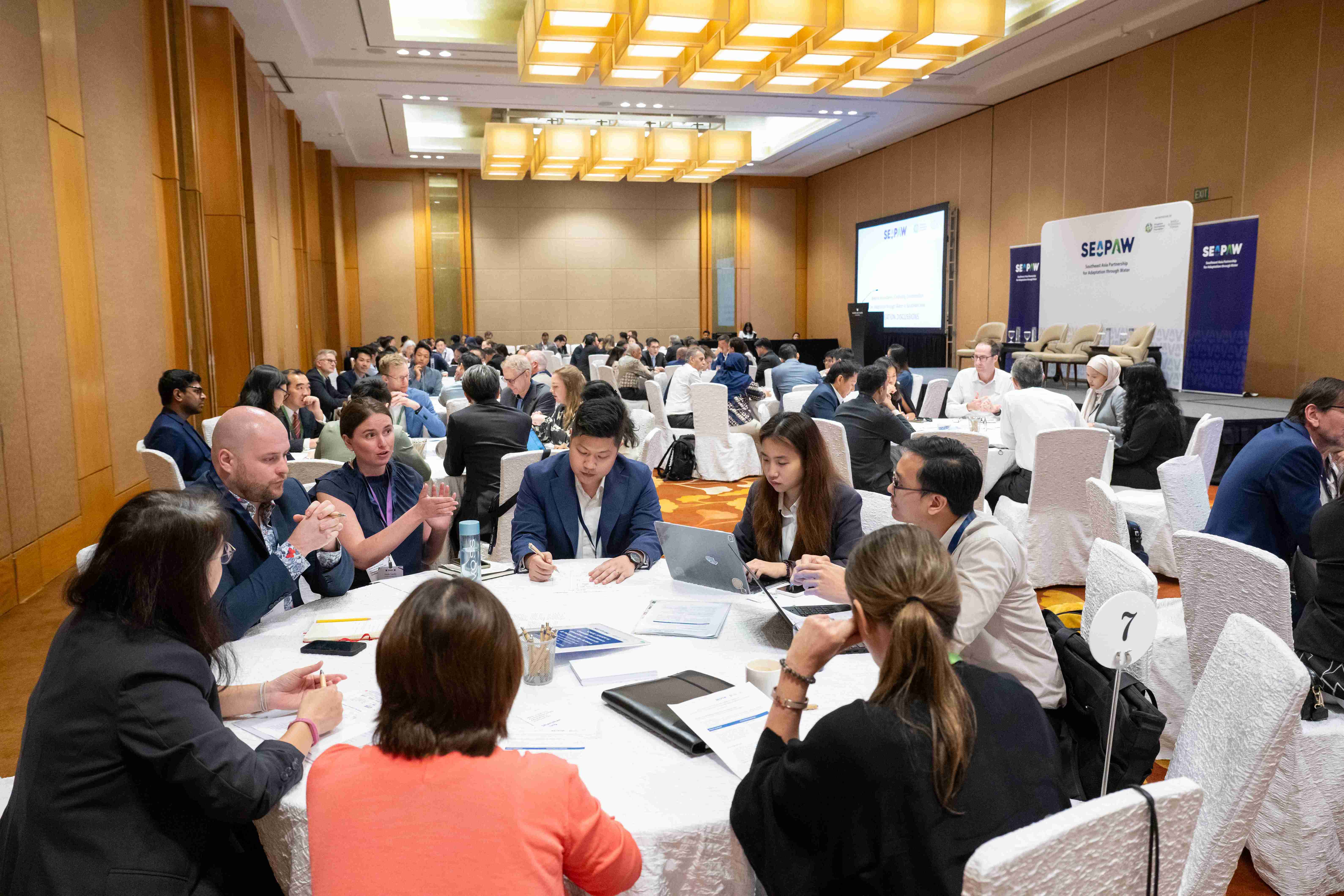
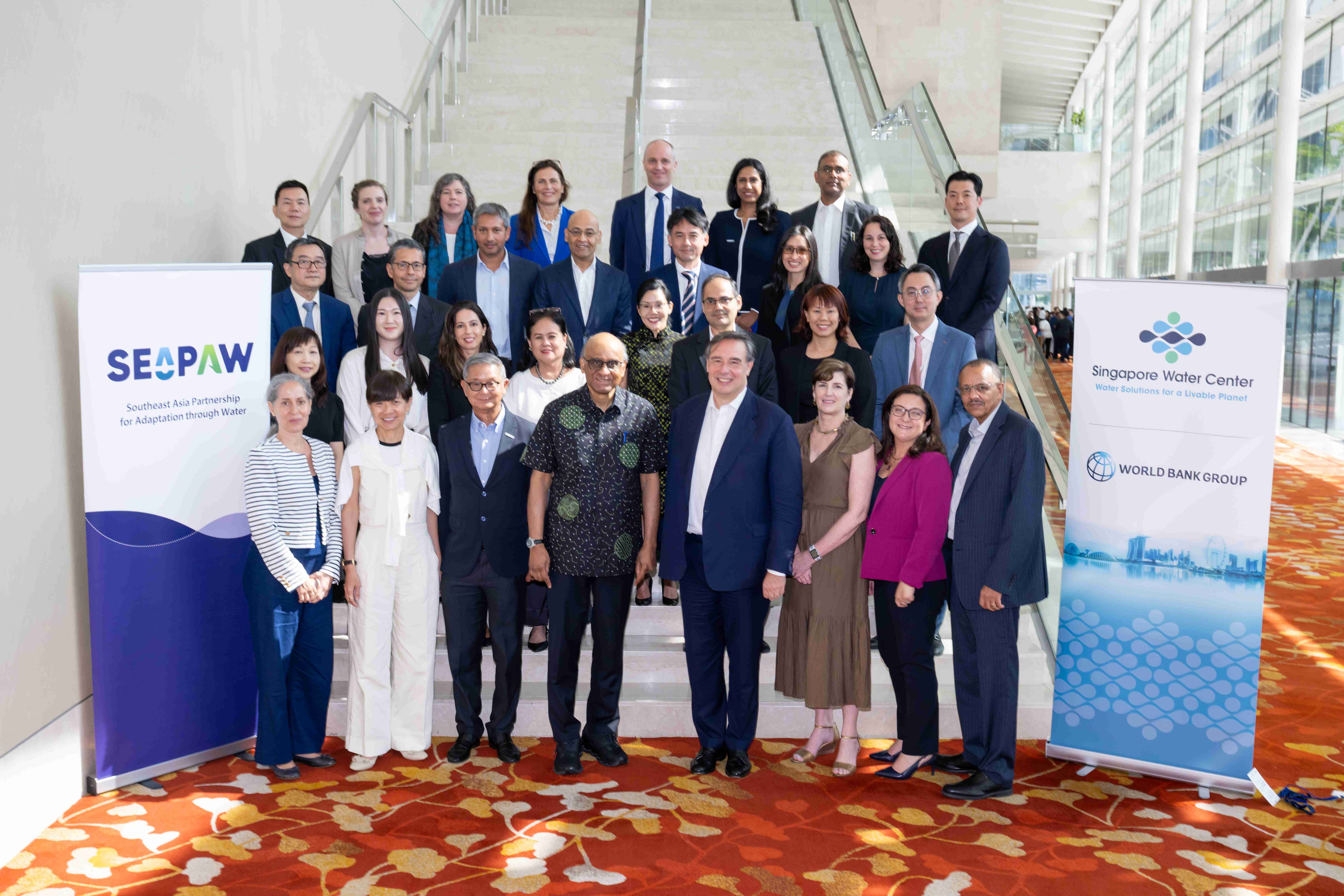
Held as a partner event of Ecosperity Week 2025 – Temasek’s annual flagship sustainability event – the SEAPAW session brought together over 100 guests from more than 70 organisations spanning government, business, philanthropy, academia and civil society. Together, they explored how water can serve as a powerful entry point for climate adaptation in the region.
Key Takeaways from the Session
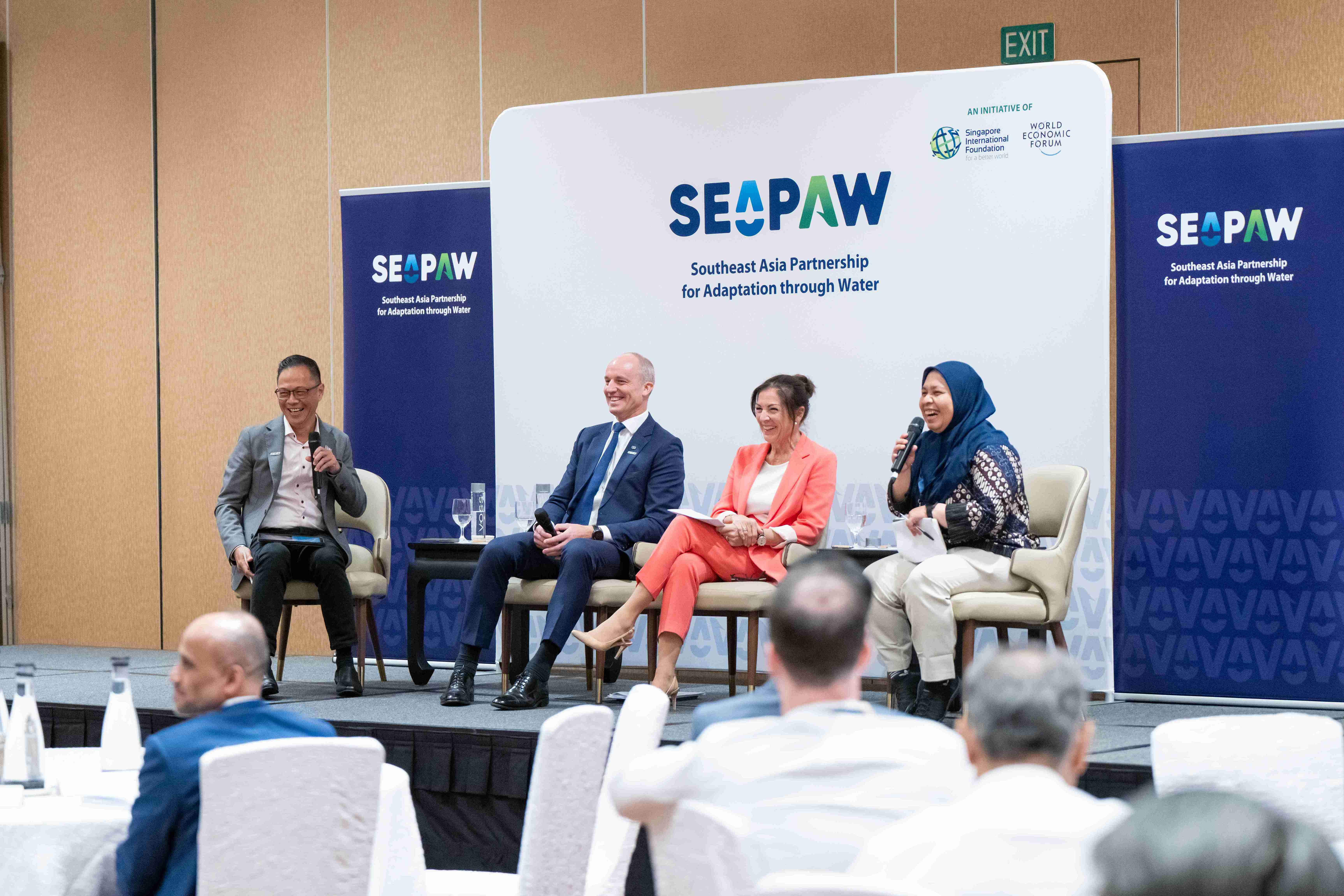
The event surfaced several vital insights to guide Southeast Asia’s water and climate adaptation efforts. Through the co-creation discussions and a high-level panel, participants collectively affirmed that:
- Water is a powerful lever for resilience. Locally led solutions exist across the region, but scaling them will require long-term vision, stronger cross-sector alignment, and genuine community ownership.
- Catalysing Climate Finance through Greater Risk Assessment. Recognising climate-related risks to operations and markets in the near to medium term will drive greater investment in adaptation. Unlocking financing will require better risk data, de-risking tools, and blended finance models and projects. These will better demonstrate resilience outcomes and shared values to attract better financing.
- Innovation needs an enabling ecosystem. From policy clarity to partnership commitments, bold ideas can only grow if the conditions around them support scale and sustainability.
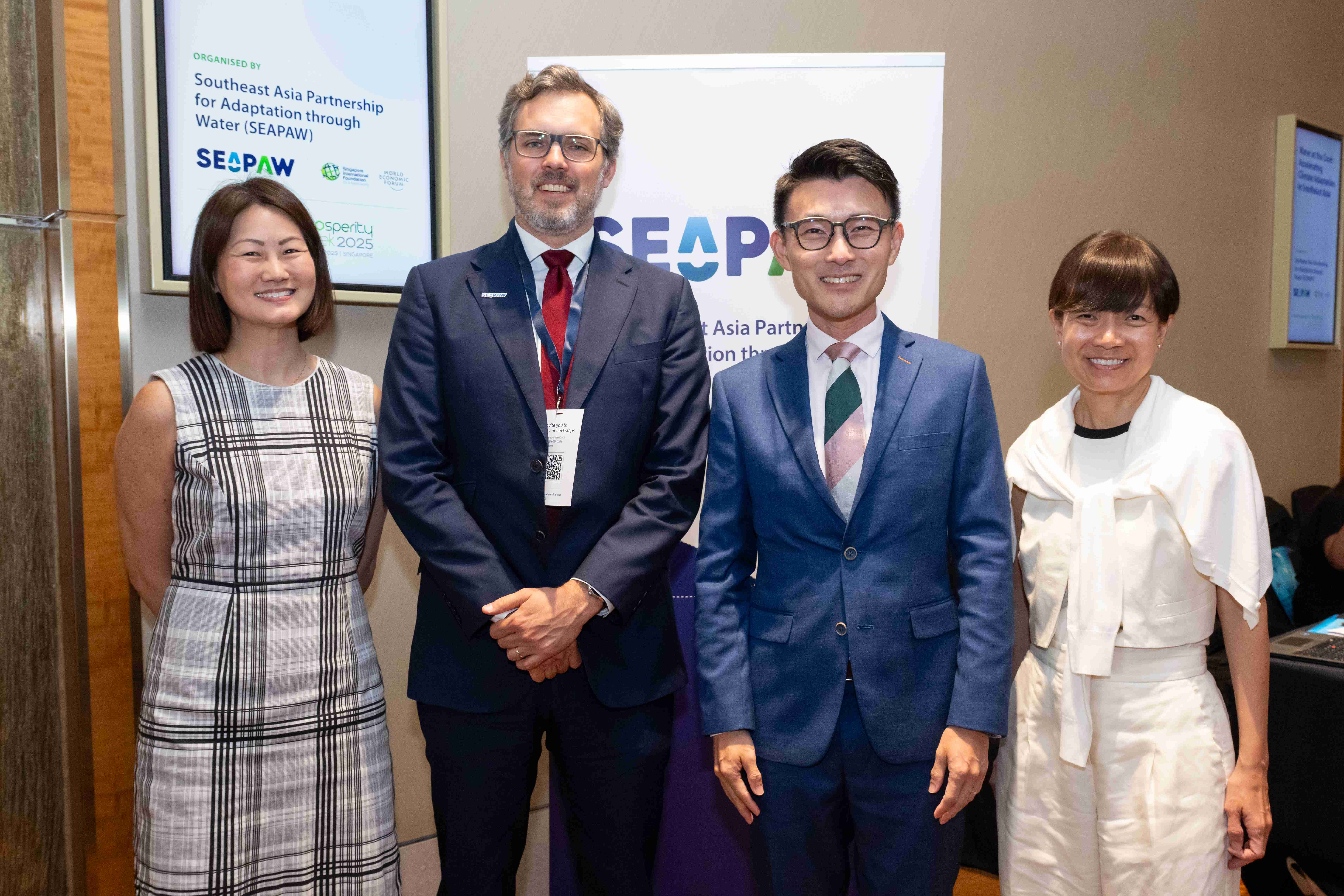
The session was graced by Mr Baey Yam Keng, Senior Parliamentary Secretary for Transport, and Sustainability & the Environment, who delivered special remarks recognising the critical role that local partners and NGOs play in climate adaptation.
He said, “SEAPAW builds on the SIF’s track record over the past 34 years, whose projects have created community benefits in more than 28 countries. Through SEAPAW’s network of partners, it can localise global solutions and partner them with the right financing options which are suited to the needs of communities. This multi-stakeholder approach taken by SEAPAW allows them to harness the strengths from across the public, private and philanthropic sectors, and bring them to bear in addressing the climate challenges we face in our region.”
Behind the Scenes: Youth at the Session
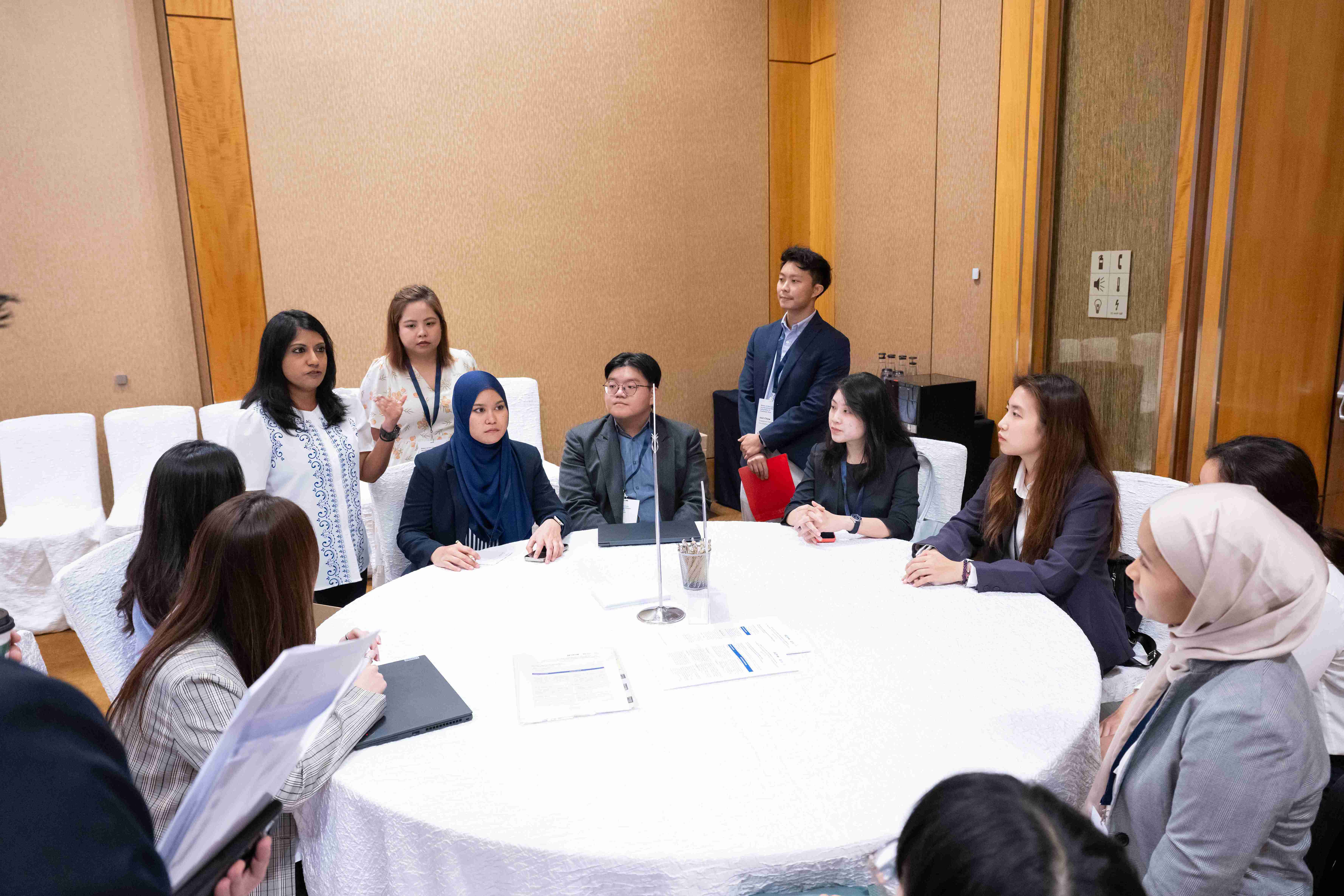
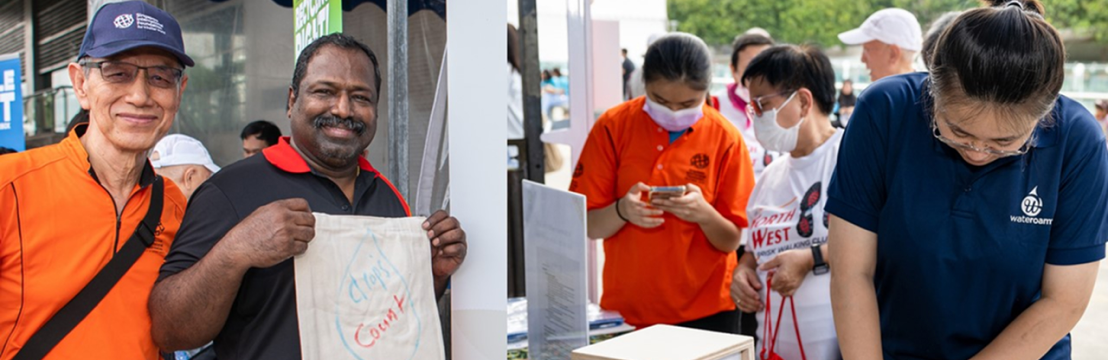
In the room too, quietly listening, learning and contributing behind the scenes, were a group of students – eight passionate individuals who had an opportunity to weigh in on the discussions, but more importantly, witness these discussions to document views and perspectives in event’s case study discussions.
These discussions examined a range of water and climate adaptation challenges – from upstream flooding in Indonesia to coastal risks and nature-based solutions.
Being a part of these important discussions paved the way for the students to become aware of the urgency and significance of approaching Southeast Asia’s climate dialogue through enhancing water resilience.
The experience offered deeper understanding of the complexities of water resilience and the urgent need for collaboration.
Zeng Chuwen, a student at Nanyang Technological University’s (NTU) Asian School of the Environment, reflected on the diverse challenges countries face.
She said: “I was involved in a case study on water issues in Jakarta, especially the upstream flooding during crop harvest seasons. It made me realise that different land areas across countries face very different challenges, so the measures we take must also be very localised.”
Madu Vanti Ramar, also from NTU’s Civil and Environmental Engineering faculty, appreciated the emphasis on actionable ideas.
She said: “One thing that stuck with me was how you pitch environmental solutions – and how those solutions differ. Nature-based solutions have value, but they often lack financing. Maybe we can integrate engineering approaches to strengthen their appeal and real-world impact.”
Ethel Chan, from NTU’s School of Civil and Environmental Engineering, stressed the need to put communities at the heart of solutions.
She said: “We need to take locals into consideration – they are the first to be impacted. If we want local perspectives, we need local data. That means involving the community and collaborating with local institutions when planning for coastal and flood risks.”
As an engineering student, she sees herself and her peers as part of the next generation that will help build these solutions.
Yochi Okta, a PhD candidate at NTU’s Asian School of the Environment, highlighted the importance of sustainability in restoration efforts.
She said: “There are many opportunities to make restoration more sustainable – not just through companies or philanthropy, but also with stronger government support. Solving global climate issues requires understanding the local context.”
Hubert Quek, from National University of Singapore’s College of Humanities and Sciences, was struck by the importance of community inclusion in climate-related infrastructure planning.
He said: “One key takeaway I had was the importance of ensuring that in infrastructure projects, local communities benefit from them. At the table I was taking notes for, the scope was to turn a swampy area with diverse wildlife into an eco-tourism spot. The state Premier made clear that the quality of life for local residents must also be uplifted. What followed were discussions that thoughtfully considered both environmental and community outcomes. It showed me that inclusion is a deliberate effort – and that local buy-in is crucial.”
From Note-Taking to Action
Beyond what they heard in the room, the event sparked reflections on how platforms like SEAPAW can foster collaboration and unlock solutions. For these youth participants, being in the room was a reminder that they, too, have a role in driving climate resilience, whether by contributing knowledge, designing solutions, or simply showing up to listen and learn.
“SEAPAW provides a platform to bring together actors from philanthropy, finance, and technology sectors to explore what they can do collectively,” said Yochi. “That kind of space is important to address sustainability challenges at a regional level.”
Ethel agreed. “It’s rare to get people from different backgrounds and sectors to convene and talk. During our table discussions, we heard so many interesting points from individuals with different expertise. This kind of cross-sector dialogue is essential for meaningful collaboration.”
For Hubert the event also broadened his understanding of interdisciplinary solutions:
“As someone with a social sciences background, I’ve mostly understood environmental issues through human behaviours and lived experiences. But hearing from experts in architecture and engineering gave me insights into physical climate solutions I wasn’t familiar with. I also learned how project scale and financial mechanisms influence what gets funded, a key part of the bigger picture.”
From Youth Voices to Global Choices
In parallel to the main session, SEAPAW together with the World Bank Group and Singapore Water Centre, hosted a closed-door roundtable with President Tharman Shanmugaratnam and senior financial leaders. The discussion spotlighted water as both a material financial risk and a strategic investment opportunity.
In his keynote, President Tharman described water as a "low-hanging fruit" in climate action. From public health to ecosystem protection, water solutions offer high-impact returns, making them an urgent priority for blended finance and innovation. As climate and economic volatility deepen, this roundtable marks a bold step in anchoring water security within global financial and policy frameworks.
Looking Ahead
The presence of youth at the SEAPAW event was a reminder that the climate conversation must be multi-generational. Including young voices doesn’t just reflect their stake in the future – it recognises the value they bring today through their energy, ideas and perspective.
Hubert said: “While climate adaptation is often seen through infrastructure, success also depends on behaviour – how people adopt and use those solutions. Youth, with their fresh perspectives, have the ability to shift mindsets, drive social change, and influence action within their communities.”
As SEAPAW continues to convene diverse stakeholders in its mission to strengthen climate resilience through sustainable water management, its ongoing engagement with youth can serve as a model for inclusive, action-oriented dialogue.
A new report by the Singapore International Foundation and the World Economic Forum, developed in collaboration with Boston Consulting Group, for SEAPAW puts forward a compelling proposition: that water should be the starting point for climate adaptation in Southeast Asia. It highlights key barriers to scaling cross-sector collaboration in water resilience and outlines practical pathways to address them.
“Adaptation through Water: Mobilising the Private Sector for Climate Adaptation in Southeast Asia” is available for download here.