Singapore-Vietnam Collaboration Enhances Special Education in Ho Chi Minh City
The project enhanced the skills of 170 Vietnamese educators to support children with autism spectrum disorder and fostered mutual understanding between the teachers.

On 28 November 2024 in Ho Chi Minh City, we celebrated the successful completion of a five-year project that enhanced the teaching skills of educators supporting children with special needs. The event featured a musical performance, a symposium and a certificate presentation ceremony.
The Teaching and Learning for Children with Autism Spectrum Disorder (TLCASD) project began in 2019 as a collaboration among the Singapore International Foundation (SIF), Ho Chi Minh City University of Education (HCMUE), and Rainbow Centre Singapore.
Each partner played an integral role in the project’s success. HCMUE identified and convened participants from various special education institutions in Ho Chi Minh City and supported training activities; Rainbow Centre brought in their expertise in special education to design and deliver workshops; and SIF coordinated the project to ensure that knowledge and resources from both Singapore and Vietnam were implemented effectively.
The project aimed to better support teachers of children with Autism Spectrum Disorder (ASD) and to create a network where they could seek support and friendship with each other. Together, the partners delivered in-person and online workshops that covered topics such as the culture of autism, motor planning, behaviour management, family engagement, activity-based interventions, and sensory integration.
During a study visit to Singapore in April 2024, the Vietnamese educators visited Rainbow Centre Singapore and other special education institutions to observe inclusive education practices firsthand.
Participants also went to the Enabling Village, a community space designed to integrate individuals with disabilities into mainstream society. Through these visits, they gained insights into Singapore’s holistic approach to social inclusivity.
Since its commencement, the project strengthened the capacity of 170 Vietnamese special education practitioners across 15 schools and one hospital to create more inclusive and supportive learning environments for children with ASD.
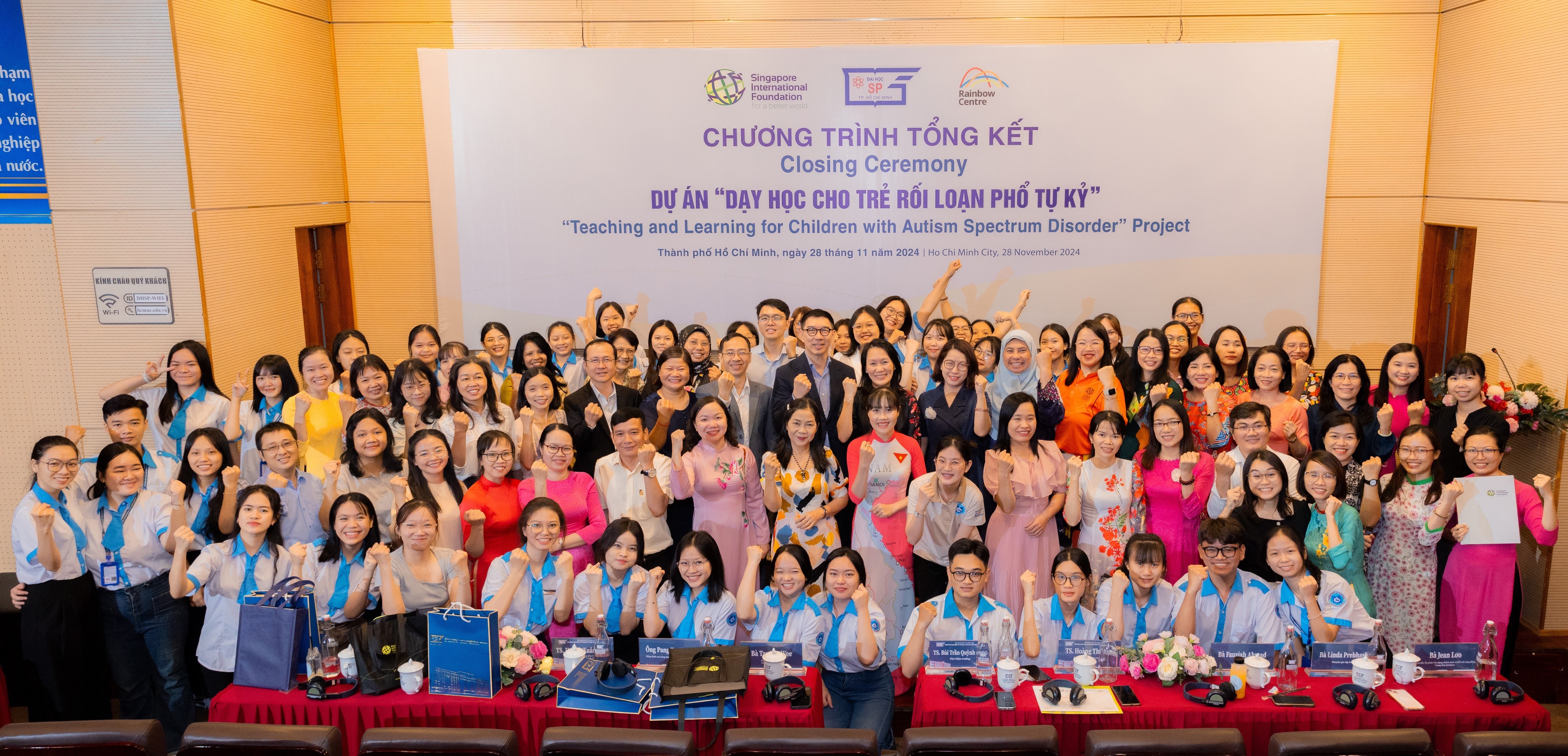
At the closing event, participants spoke about how the project had enriched their professional perspectives and introduced practical, impactful strategies to support students with ASD.
Almost all participating educators reported that they had introduced teaching support techniques in their classrooms. These included tools such as visual aids, timetables, and simple schedules to encourage communication and interaction among students.
The teachers also adopted an activity-based intervention approach, which encouraged students to initiate activities and set goals in everyday routines to develop the students’ functional skills.
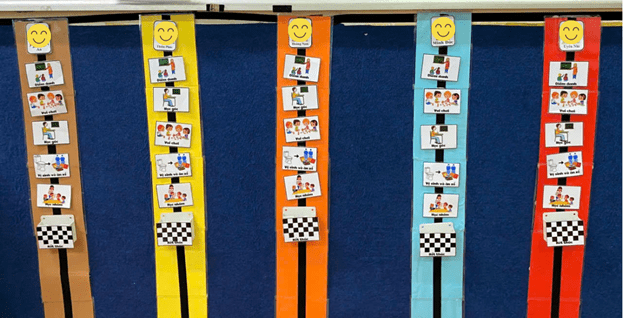
Ms Do Thi Thuy Truc, from Early Intervention Room at HCMUE, shared how she incorporated several teaching methods into her lessons.
She said: “After I implemented a visual timetable and rearranged the classroom into themed activity areas, I saw remarkable improvement in my students. The simplified timetable, paired with visual cues for each activity, allowed them to understand their daily schedule and participate actively in tasks across all areas of the classroom.”
Ms Le Thi Thu Hong from the Centre for Inclusive Education Development Support for Persons with Disabilities was selected as one of 10 Master Trainers, who then taught other teachers.
She said: “I developed specific topics and shared them during summer training sessions. These helped my colleagues master techniques such as handling sensory disorders, co-teaching, activity-based interventions, and early intervention models. It was rewarding to share these insights and enhance our teaching practices as a team."
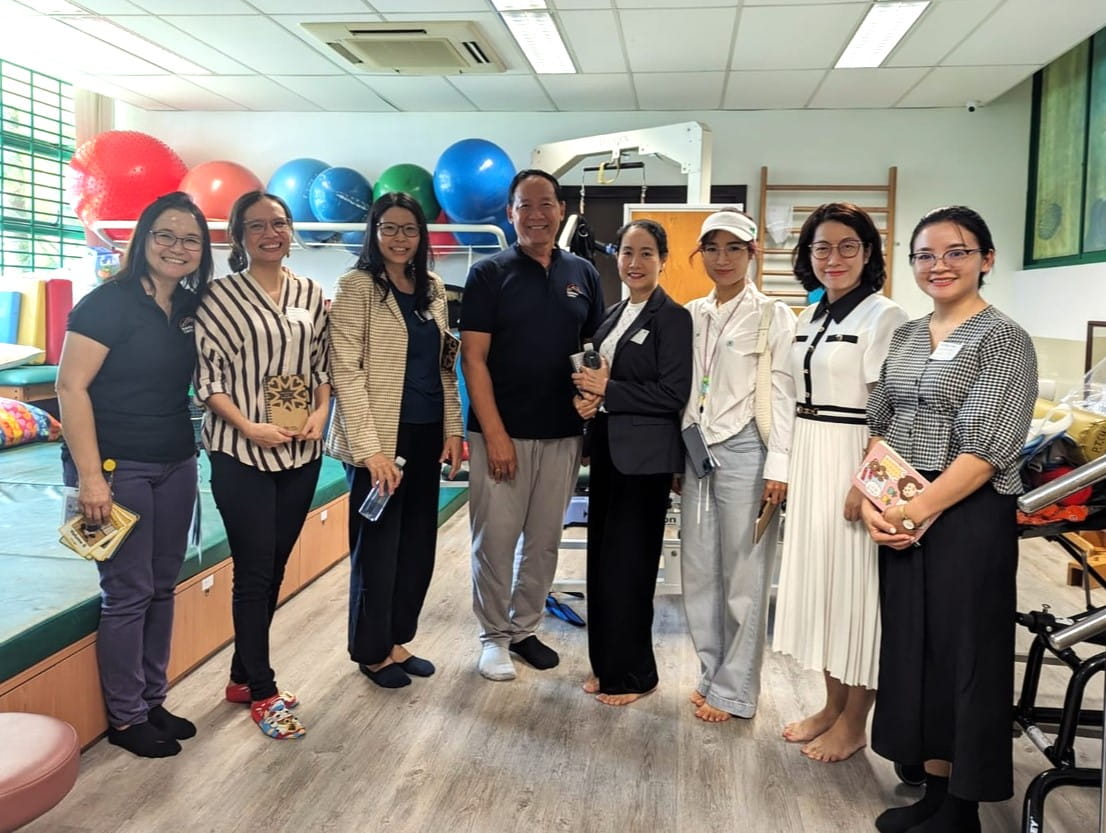
For some, the highlight of the TLCASD project was the study visit to Singapore. One participant, Ms Phuong Diem Huong from HCMUE, said she gained a greater understanding of how inclusive design and technology can create a more conducive learning environment for people with special needs.
She said: “Special education schools in Singapore offer safe and inclusive spaces for students to learn. Another takeaway for me was the close collaboration between schools and families that supports the children’s growth and development. I hope to adopt this approach in my school and engage families more effectively to achieve better outcomes for our students.”
This Might Also Interest You