Clean Water - What a Difference it Makes!

Volunteer photographer Ahmad Iskandar travelled with the SIF team to cover the launch of its first Water for Life project in Indonesia. Despite the intense activity that typically surrounds such an event, the 27-year-old found time to capture images that were particularly meaningful to him.
Water may cover most of the earth’s surface, but it doesn’t mean it is accessible to everyone in the form it needs to be in. The irony is not newly discovered but it struck me with special force as I went about shooting images for this project. We so take clean water – and access to it – for granted in Singapore. And why not – we’ve had it all our lives, except perhaps for the oldest living generations.
Not so for people living in Lamongan, a Regency located in the Indonesian province of East Java. According to its Mayor, Mr Fadeli SH, only 28% of the population have access to clean drinking water. That’s about one out of 4. And the Singapore International Foundation’s (SIF) Water for Life (Lamongan) programme aims to change that.
My first stop was a visit to SD Jatijero, one of the 90 rural schools in Lamongan that WFL is going to reach. It is as heart-wrenching as it is inspirational.
To meet the daily needs of their students, the school used to draw water from a small pond in their backyard. Untreated and filled with bacteria, drinking this water translates into many health risks. Left unchecked (doctors and medicine costs a lot of money), the problems escalate. But with no real solution, on top of a lack of public awareness, the choices are limited and the dangers very real.
It was during this trip with the Singapore International Volunteers (SIVs) that I learnt it isn’t just a matter of installing the equipment. For the good results to last, more is needed.

One of the steps directly deals with the issue of clean drinking water. Volunteers Simon Neo (above) and Chia Kit Tuck, teamed up with locals to install the water filter which is connected to a water storage tank.
The simple design meant installation was hassle-free and finished within an hour. The two volunteers also spent time explaining how the water filter works and how to look after it so that it lasts a long time. And by the end of this encounter, the school and its children had access to clean drinking water.
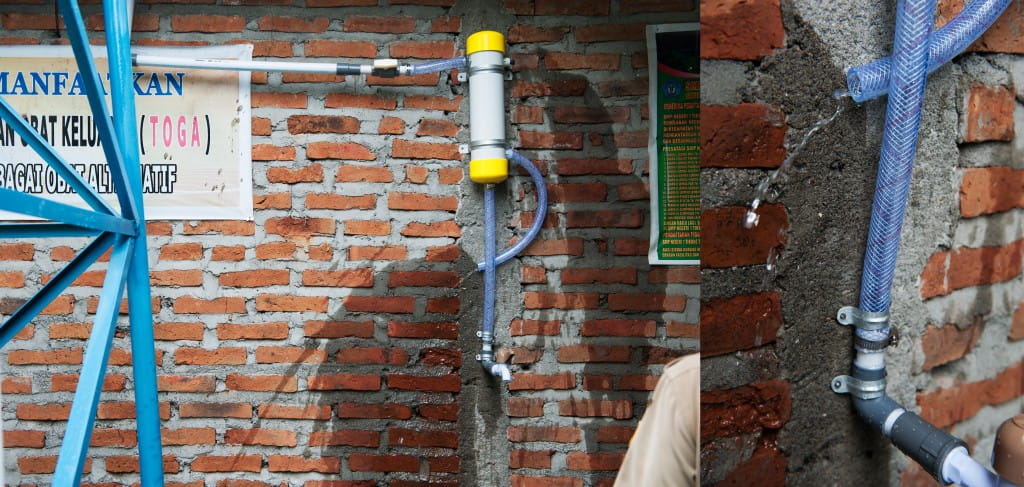
The gratification came from the smiles of the school teachers who know see the benefits the water filter will bring to the students. The atmosphere reflected a sense of hope for a brighter and healthier future for the school children who, themselves, might not fully realise it yet.
However, a tool is only as good as the person using it.
Clean water is part of a larger system that relates to health and the environment. A better understanding of the bigger picture can help maximise the potential that clean water brings.
This is where the other SIVs stepped in.
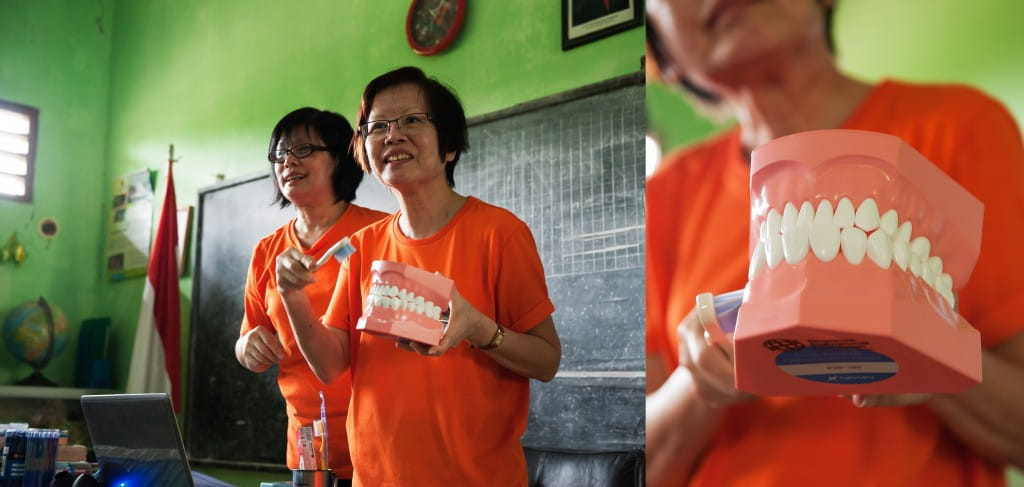
Singapore International Volunteers Velda Lee (above left) and Lee Soi Moi (above right), who are trained nurses, showed that clean hygiene practices are as important as drinking clean water. With posters, props and songs prepared in advance, they managed to share a serious topic in a fun and playful manner.
While I was shooting, I noticed the most beautiful smiles from the kids, which appeared often during the fun portions. I felt a sense of joy knowing that such smiles could be protected for a little longer with the efforts put in by the volunteers.
At the same time, another group of SIVs, Far’ain Bte Jaafar, Betsy Ng and Nurul Hannah Mohd Amran, were raising awareness of the environment, water in particular, among the kids.
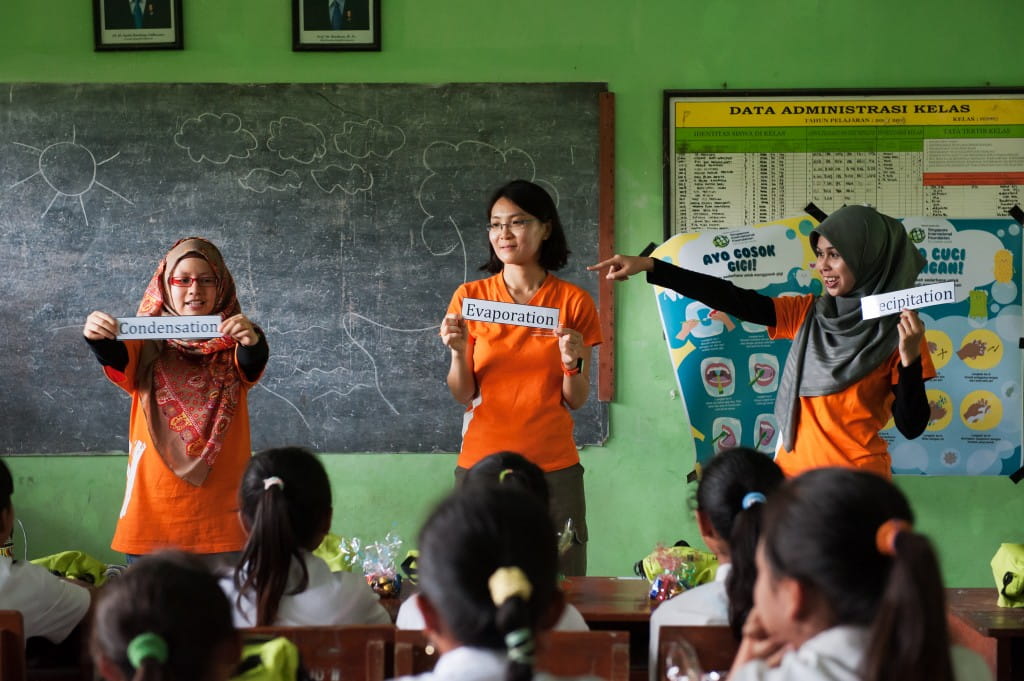
Armed with expertise in early childhood education, SIV Far’ain Bte Jaafar (above far left) is no stranger in working with children. With a gentle demeanour and an infectious smile, she connected with the students easily. The chemistry exhibited by the three volunteers made it out to be a fun learning experience for the children.
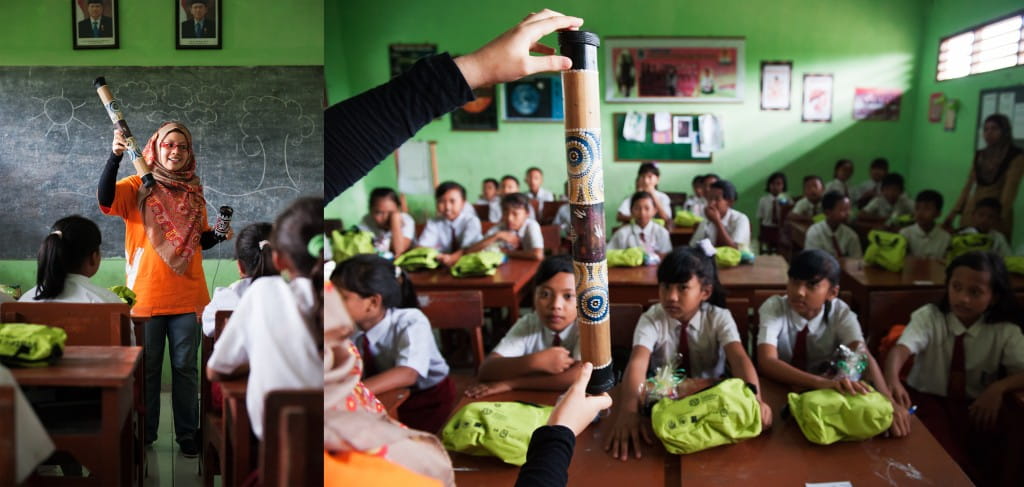
There was a good mix of information dissemination and participation on both sides. The classes were rarely static, with the students clearly amused by the volunteers and the new knowledge they were gaining.
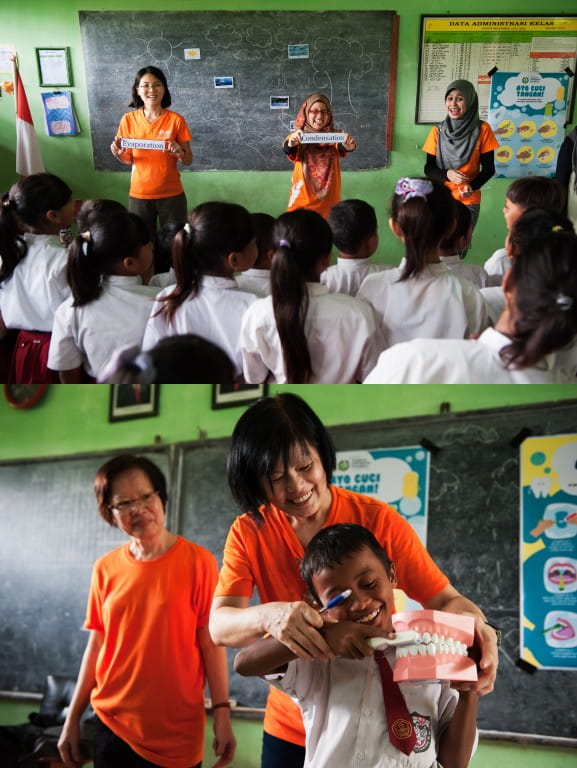
A moment of pride overcame me when the volunteers, plagued with language barriers, put their limited Malay vocabulary to good use, a by-product of our multi-cultural society.
While Malay and Bahasa Indonesia are not one and the same, it helped to make the classes more approachable. From “gigi”, which means teeth, to “pandai”, which means clever, language was creatively adapted for the benefit of the students.
I headed to Desa Kebet next, a nearby village which had a water filter installed at the village hall during an earlier SIF trip. Besides schools, Water for Life (Lamongan) is reaching out to villages to help provide the same access to potable, clean drinking water.
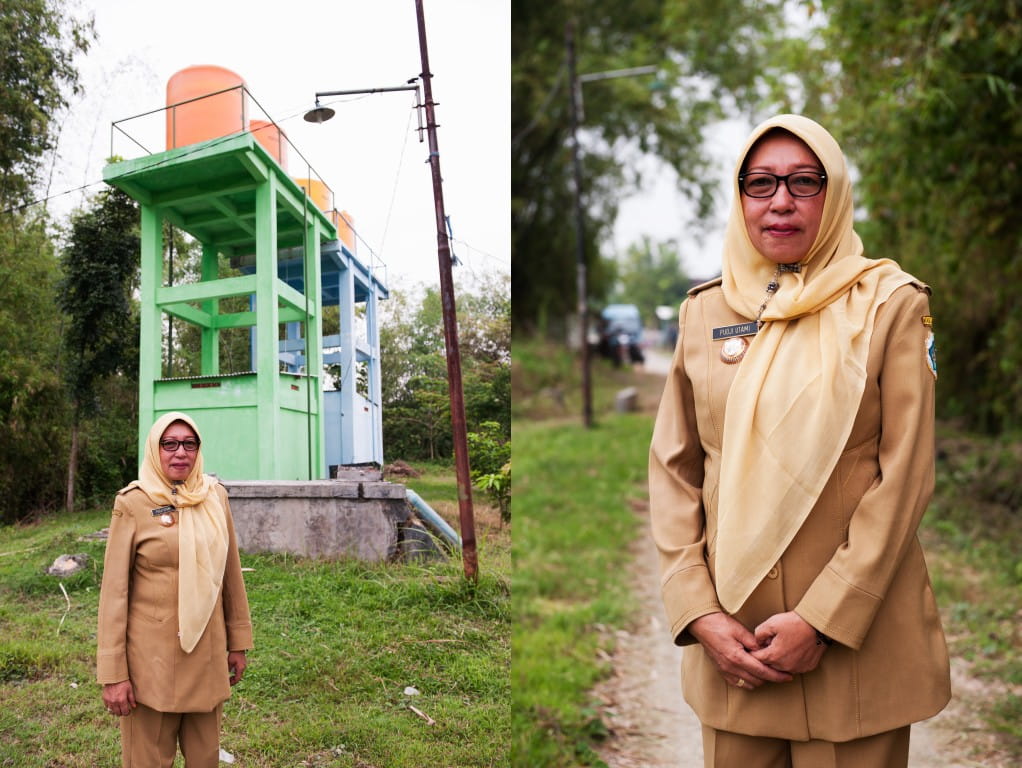
Meeting with village head, Ibu Puji Utami (above), it was clear that access to clean drinking water is one of her biggest concerns for her villagers. She expressed deep thoughts on the matter, and readily shared details of the villagers’ lives before and after the installation of the water filter.
About 10% of the villagers here are unable to purchase water from the local water association, priced at Rp1,000 per cubic litre. Moreover, the purchased water is not filtered for drinking, and villagers also spend a considerable amount of time and money, boiling it to make it safe for consumption.
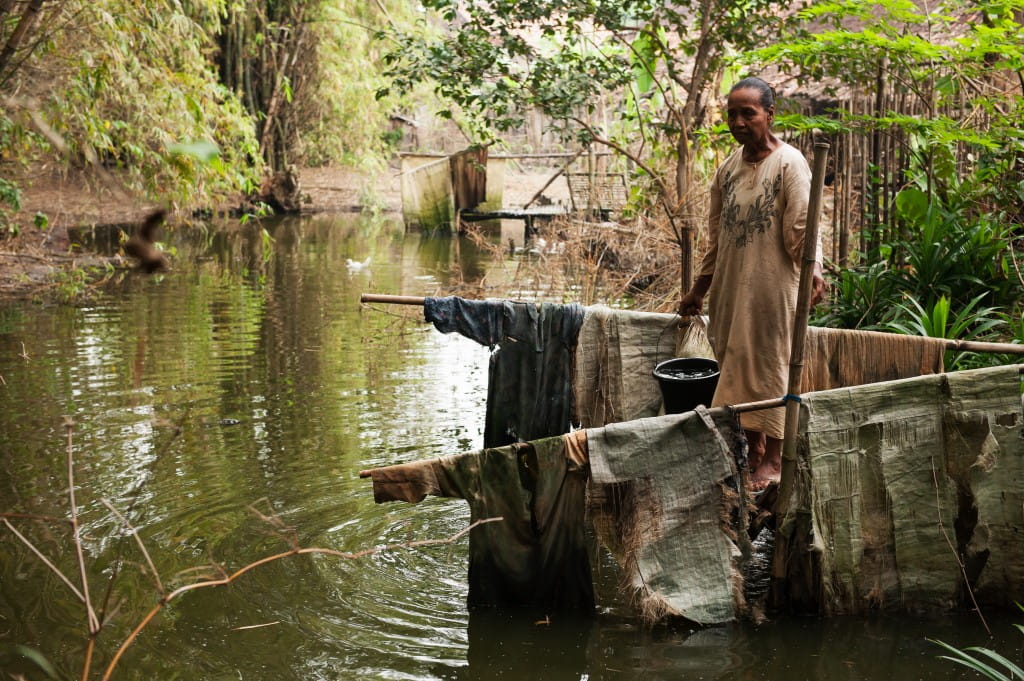
Access to clean drinking water and sanitation is acknowledged to be a basic human right. It is vital for improving and maintaining physical and mental health, a stand affirmed by the resolution adopted by the United Nations Human Rights Council. A big problem on its own, there are still so many steps that need to be taken to address this.
No matter how small or big their contribution is perceived to be, in my mind, the SIF volunteers have earned the right to say that they have worked with this community to take a step in the right direction, and that they have made a real difference to so many lives.
This Might Also Interest You